Self-Guided Walking Tour in Charleston

8 Stops 3.9 km ~2.0 hours
Start This Tour Free
Walking tour route map of Charleston
Start This Tour Free

Why Walk Charleston? A Self-Guided Tour

This self-guided walking tour covers 3.9 km through Charleston's historic peninsula, hitting 8 stops over roughly 2 hours. You'll start at the City Market near the harbor and work your way south through the gallery district, past colonial churches and antebellum mansions, down to the waterfront promenade at The Battery, then loop back north along East Bay Street.

Charleston's compact downtown makes it one of the best walking cities in the American South. The streets are flat, the blocks are short, and nearly every turn reveals a different layer of history: 18th-century churches, Federal-period townhouses, and Reconstruction-era storefronts all packed into a few square miles. This route sticks to the lower peninsula where the density of historic architecture is highest, so you're never more than a block from something worth stopping to look at.

The tour works best in the morning before the midday heat sets in, especially from May through September. If you're doing it in summer, start by 9:00 AM and carry water. Three of the eight stops charge admission (totaling $41 if you visit all three), but you can appreciate most of the route from the outside without spending a dollar.

The Route: 8 Stops

Swipe through images or scroll names below

Scroll to explore →
1. Historic Charleston City Market
2. Gibbes Museum of Art
3. St. Michael's Church
4. Nathaniel Russell House
5. The Battery and White Point Garden
6. Old Exchange & Provost Dungeon
7. Rainbow Row
8. Waterfront Park

Route Map

Tap to load interactive map
AI Tourguide
Walk this exact route with a private AI guide.
Full GPS navigation, interactive stories, and a guide that answers all your questions. A private guide experience for just €5/hour.
Start This Tour

Your Charleston Walking Tour, Stop by Stop

  1. 1

    Historic Charleston City Market

    Historic Charleston City Market

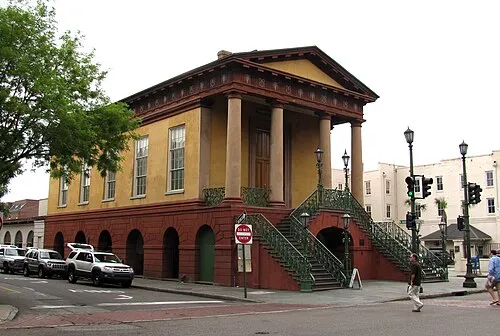
    The market stretches four full city blocks along Market Street, from Meeting Street down to East Bay. It's been running since 1788, making it one of the oldest public markets in the country. The long, open-air sheds house local vendors selling sweetgrass baskets (a Gullah tradition passed down through generations), pralines, hot sauce, and plenty of tourist souvenirs. The 1841 Market Hall at the Meeting Street end is the most impressive piece of architecture here, with a Greek Revival facade and bull-skull ornamentation along the cornice. Free to enter. Weekday mornings are the quietest time to browse. On Friday and Saturday evenings from 6:30 to 10:30 PM, the Night Market brings out additional artisan vendors and a livelier crowd. Skip the mass-produced items and head for the sweetgrass basket weavers in the center sheds. Those baskets are the real deal, handmade using techniques that trace back to West Africa.

    Learn more about Historic Charleston City Market →
    Hours
    Mon-Thu: 9:30 AM – 5:00 PM | Fri-Sat: 9:30 AM – 5:00 PM, 6:30 – 10:30 PM | Sun: 9:30 AM – 5:00 PM
    Price
    Free (entry)

    3 min walk

  2. 2

    Gibbes Museum of Art

    Gibbes Museum of Art

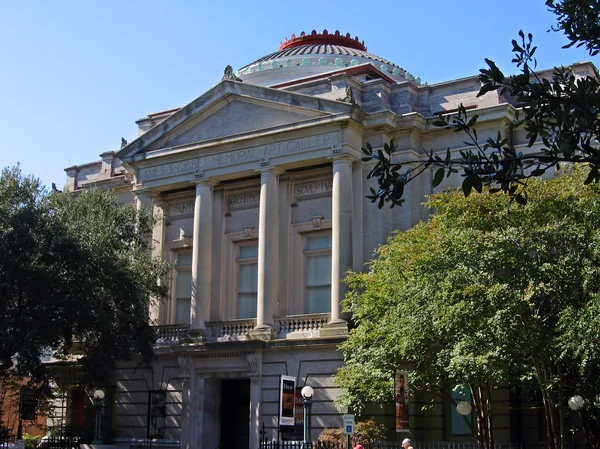
    Two blocks south on Meeting Street, the Gibbes occupies a 1905 Beaux-Arts building with over 10,000 works spread across 30,000 square feet of gallery space. The collection focuses on American art with a strong emphasis on Southern artists and Charleston scenes from the Charleston Renaissance, an early-20th century movement that rarely gets attention in major museum narratives outside the Southeast. Look up when you enter: the central rotunda is capped by a restored Tiffany-style stained-glass dome that catches the light beautifully in the afternoon. Admission is $15. The museum is closed on Tuesdays, and Wednesday evenings it stays open until 8:00 PM, which is the best time to visit if you want the galleries almost to yourself. The miniature portrait collection on the second floor is exceptional and often overlooked. Plan for about 45 minutes inside if you're interested in art, or simply admire the building's exterior and move on.

    Learn more about Gibbes Museum of Art →
    Hours
    Mon: 10:00 AM – 5:00 PM | Tue: Closed | Wed: 10:00 AM – 8:00 PM | Thu-Sat: 10:00 AM – 5:00 PM | Sun: 1:00 – 5:00 PM
    Price
    USD 15

    3 min walk

  3. 3

    St. Michael's Church

    St. Michael's Church

    Standing at the corner of Meeting and Broad Streets, the so-called Four Corners of Law, St. Michael's is the oldest church building in Charleston, completed in 1761. The 186-foot steeple was used as a navigation landmark by ships entering the harbor and was painted black during the Civil War to make it less visible to Union gunners (it didn't work; they shelled it anyway). George Washington attended services here in 1791. The interior is surprisingly plain by European standards, with white walls, dark wood box pews, and clear windows that flood the space with natural light. Free to enter Monday through Thursday from 9:00 AM to 4:00 PM and Friday mornings until noon. The churchyard holds graves dating to the 1750s, including two signers of the Constitution. Walk through the cemetery on the south side of the church; it's quiet even when the street outside is crowded.

    Learn more about St. Michael's Church →
    Hours
    Mon-Thu: 9:00 AM – 4:00 PM | Fri: 9:00 AM – 12:00 PM | Sat: Closed | Sun: 8:00 AM – 12:00 PM
    Price
    Free

    4 min walk

  4. 4

    Nathaniel Russell House

    Nathaniel Russell House

    At 51 Meeting Street, this Neoclassical mansion was completed in 1808 at a cost of $80,000, an enormous sum at the time. The main attraction is the three-story cantilevered elliptical staircase in the center of the house, which spirals upward without any visible support structure. It's an engineering marvel that still confuses architects who come to study it. The guided tour takes about 30 minutes and covers the family's history, the enslaved people who lived and worked here, and the painstaking restoration of the interiors. Admission is $14. Open Tuesday through Sunday from 10:00 AM, Monday from 1:00 PM. The formal garden behind the house is included with admission and worth a few minutes. If you only have budget for one historic house museum in Charleston, this is the one to pick. The staircase alone justifies the ticket price.

    Learn more about Nathaniel Russell House →
    Hours
    Mon: 1:00 – 4:00 PM | Tue-Sun: 10:00 AM – 4:00 PM
    Price
    USD 14

    6 min walk

  5. 5

    The Battery and White Point Garden

    The Battery and White Point Garden

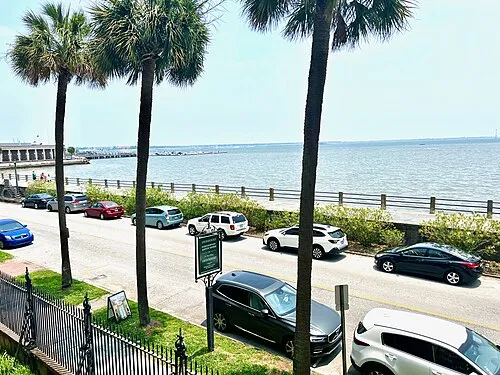
    The southernmost tip of the Charleston peninsula, where the Ashley and Cooper Rivers meet. The Battery refers to the seawall and promenade built between 1820 and 1850, originally a defensive fortification. Today it's a public walkway lined with antebellum mansions on one side and harbor views on the other. On a clear day you can see Fort Sumter about 3.5 miles out, where the Civil War's first shots were fired in 1861. White Point Garden fills the point itself with live oaks draped in Spanish moss, Civil War cannons and mortars scattered across the lawn, and park benches facing the water. One of the cannons on display is actually a fake, manufactured in 1933 as a movie prop and quietly left here afterward. Free and open daily from 7:00 AM to 9:30 PM. The promenade along East Battery is the best spot in Charleston for sunset if you time it right.

    Learn more about The Battery and White Point Garden →
    Hours
    Daily: 7:00 AM – 9:30 PM
    Price
    Free

    7 min walk

  6. 6

    Old Exchange & Provost Dungeon

    Old Exchange & Provost Dungeon

    This Palladian building at the foot of Broad Street was built in 1771 as the city's custom house and has been at the center of Charleston's history ever since. South Carolina ratified the U.S. Constitution here in 1788. The main floor is a grand hall with period furnishings and exhibits on colonial trade. The real draw is the basement: the Provost Dungeon, where the British imprisoned American patriots during the Revolutionary War. The brick-vaulted underground chambers are original, and the damp, low-ceilinged space gives you a visceral sense of what confinement looked like in the 1780s. Admission is $12, which includes a guided presentation that runs about 30 minutes. Open Monday through Saturday from 9:00 AM to 5:00 PM, Sundays from 11:00 AM. The building sits directly on the original 1690s seawall; you can see portions of it exposed in the dungeon level.

    Learn more about Old Exchange & Provost Dungeon →
    Hours
    Mon-Sat: 9:00 AM – 5:00 PM | Sun: 11:00 AM – 5:00 PM
    Price
    USD 12

    2 min walk

  7. 7

    Rainbow Row

    Rainbow Row

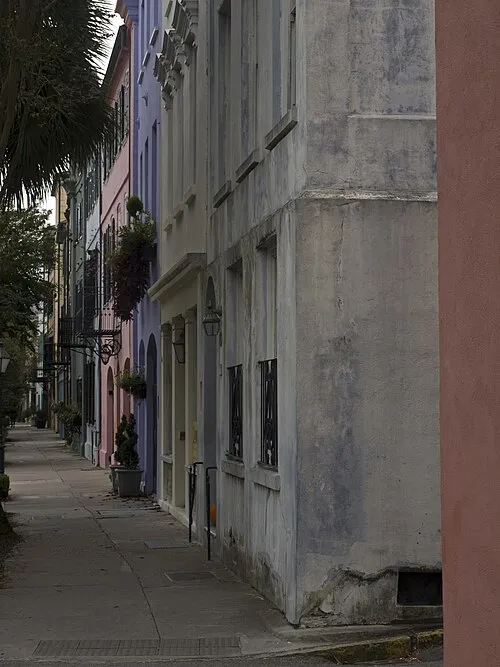
    These 13 pastel-colored Georgian row houses at 79 to 107 East Bay Street are the most photographed spot in Charleston. The houses date to around 1740 and were originally merchant shops with residences above. By the early 20th century they had deteriorated badly. Restoration began in 1931 when a local preservationist purchased several units and painted them in soft pastels inspired by Caribbean colonial architecture. The pink, blue, yellow, and green facades have been a Charleston icon ever since. These are private residences, so you can't go inside, but the sidewalk view is the whole point. Early morning before 9:00 AM gives you the best light for photos and the fewest people in your shots. The cobblestone street (actually ballast stones from colonial-era ships) adds to the atmosphere. Stand across the street on the east side of East Bay for the classic full-row photograph.

    Learn more about Rainbow Row →
    Hours
    Open 24/7
    Price
    Free

    3 min walk

  8. 8

    Waterfront Park

    Waterfront Park

    This 12-acre park stretches half a mile along the Cooper River waterfront and opened in 1990 after a $13 million construction project. The signature Pineapple Fountain near the center of the park has become one of Charleston's most recognizable landmarks. Two long piers extend out over the river, and the southern pier was rebuilt using original 17th-century granite stones recovered from the site. The park is lined with swinging benches under pergolas, live oaks, and palmetto palms. It's the best spot to sit down and rest your feet at the end of the walk. Open daily from 7:00 AM, with slightly later hours on Sundays. In warm weather, kids play in the splash pad around the Pineapple Fountain. The views from the end of the longer pier look out toward the Ravenel Bridge, Fort Sumter, and the harbor islands. From here you're a short walk back to the Market area where the tour began.

    Learn more about Waterfront Park →
    Hours
    Mon-Sat: 7:00 AM – 9:30 PM | Sun: 7:30 AM – 10:30 PM
    Price
    Free
AI Tourguide
Walk this exact route with a private AI guide.
Full GPS navigation, interactive stories, and a guide that answers all your questions. A private guide experience for just €5/hour.
Start This Tour

Self-Guided Tour vs. Group Tour in Charleston

Charleston is one of those rare American cities where the architecture alone could carry a full day of walking. This route concentrates the best of it into under 4 km. You'll see 280 years of building history, from the 1740s merchant houses of Rainbow Row to the Beaux-Arts elegance of the Gibbes Museum, without ever needing a car or a bus.

The three paid attractions on the route (Gibbes Museum at $15, Nathaniel Russell House at $14, Old Exchange at $12) total $41 combined, but each one offers something distinct: world-class art, jaw-dropping architectural engineering, and a genuinely unsettling dungeon. If you're on a budget, you can enjoy five of the eight stops for free and still have a deeply satisfying walk through Charleston's history.

What makes this tour especially worth it is the variety. You're not just looking at pretty houses. You're tracing Charleston's story from colonial port town to Revolutionary War battleground to antebellum showpiece to modern cultural hub, all on foot, all within a few blocks of each other.

Group Tour AI Self-Guided
Price €25–€50 per person €5/hour or €20 all-inclusive
Flexibility Fixed schedule Start anytime, skip stops
Languages 1–2 languages 11 languages
Pace Group pace Your own pace

How Long Does This Charleston Tour Take?

Our route covers 3.9 km with 8 stops and takes approximately 2.0 hours at a relaxed pace.

Plan for about 2 hours if you walk the route without entering any of the paid attractions. Add 30 minutes for the Nathaniel Russell House tour, 30 to 45 minutes for the Gibbes Museum, and 30 minutes for the Old Exchange, so a thorough visit with all three interiors runs closer to 3.5 hours.

The total walking distance is 3.9 km on flat terrain with sidewalks the entire way. Charleston's grid is easy to navigate, and the stops are close enough together that you'll rarely walk more than 7 minutes between them. In summer heat (June through September), factor in extra time for shade breaks and hydration. The park at the end of the route is a natural place to cool down before heading back.

Tips for Walking in Charleston

AI Tourguide
Walk this exact route with a private AI guide.
Full GPS navigation, interactive stories, and a guide that answers all your questions. A private guide experience for just €5/hour.
Start This Tour

AI Audio Guide for This Tour

Follow this Charleston walking tour step by step in the AI Guide app. You'll get turn-by-turn navigation between all 8 stops, offline maps so you don't burn through data, and the freedom to skip or reorder stops as you go.

AI Audio Guide Stories, history and fun facts narrated as you walk. No earpiece rental needed.
GPS Navigation Turn-by-turn directions so you never get lost between stops.
Ask Anything Curious about a building you pass? Ask your AI guide on the spot.
11 Languages Switch language anytime. No separate tour needed.
Start This Tour Free

Common Questions

Yes. The route is flat, stroller-friendly on most sections, and short enough that kids won't lose interest. The cannons at White Point Garden and the Provost Dungeon at the Old Exchange are the biggest hits with younger visitors. The Pineapple Fountain splash pad at Waterfront Park is a guaranteed crowd-pleaser for toddlers.
Late March through May and October through November are ideal: mild temperatures, lower humidity, and fewer crowds. Summer (June to September) is hot and humid with afternoon thunderstorms, so start early. Winter is quiet and pleasant with highs around 55 to 60 degrees Fahrenheit, though some attractions have shorter hours.
Yes, but with adjustments. The Gibbes Museum opens at 1:00 PM on Sundays instead of 10:00 AM, and St. Michael's Church is only accessible during morning worship services from 8:00 AM to noon. The Market, Nathaniel Russell House, Old Exchange, and all outdoor stops are open on Sundays.
No booking needed. This self-guided tour is available anytime. Open the route on your phone and start walking. The AI audio guide works instantly, no reservation required.
The AI audio guide is available in 11 languages: English, German, French, Spanish, Italian, Japanese, Chinese, Portuguese, Danish, Norwegian, and Swedish.
Yes. Skip any stop, spend extra time at places you like, or start the route from any point. You can also ask the AI to suggest a shorter route.
AI Tourguide
Curated by AI Tourguide GPS-verified routes, reviewed and updated regularly.
Last verified March 2026